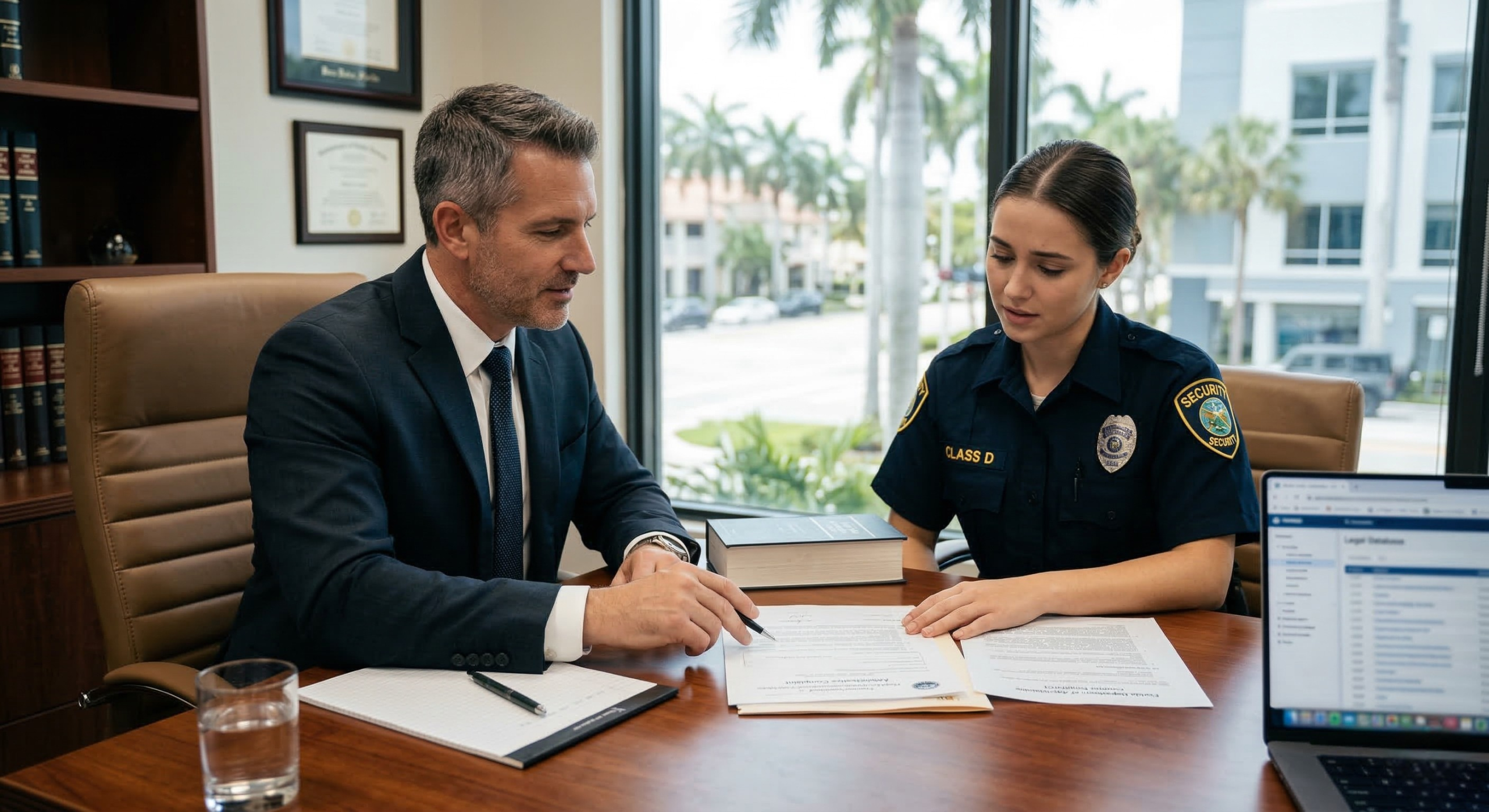

Receiving a dentist administrative complaint from the Florida Department of Health (DOH) regarding your license can feel like the floor has dropped out from under your practice. You have spent years building your reputation, and the thought of a single administrative complaint jeopardizing your livelihood is incredibly stressful.
Protecting your dental license is more than a professional necessity; it is the safeguard of your livelihood and your reputation in the community. In Florida, the Department of Health (DOH) and the Board of Dentistry enforce strict regulations, and receiving an administrative complaint can be a confusing and high-stakes ordeal.
Need immediate guidance? Contact Elevate Legal Services, PLLC today at 561-770-3335 for a confidential consultation, or reach out to us to speak with an attorney about your case.
But you do not have to navigate this alone.
This article will clarify your rights under Florida law, break down the specific statutes mentioned in your complaints, and outline the clear path toward defending your professional standing. By the end of this guide, you will understand exactly how the administrative process works and what steps you can take today to protect your career.
Understanding the Allegations: Florida Statute 466.028(1)
 The Florida Board of Dentistry and the DOH oversee professional conduct to ensure patient safety. Most administrative complaints against dentists are rooted in specific subsections of Florida Statute 466.028.
Here is what that means legally.
The state must prove that your actions, or lack thereof, violated the specific standards of care or administrative rules governing your license.
1. Incompetence or Negligence (F.S. 466.028(1)(x))
This is the most common allegation. It focuses on your clinical performance and whether it meets the “minimum standards” of the profession.
- The Threshold:The Board looks at whether your diagnosis or treatment deviated from what a “reasonably prudent” peer would have done.
- Common Triggers:Recurring malpractice claims or a single high-indemnity settlement (often over $25,000) can trigger an automatic investigation.
2. Financial Exploitation and Excessive Fees (F.S. 466.028(1)(z))
This statute shifts the focus from clinical skill to ethical business practices.
- The Charge:You may be accused of “exploiting a patient for financial gain” or charging “excessive or unreasonable fees.”
- The Risk:Allegations under this section are viewed harshly by the Board. A finding of guilt here often carries a mandatory minimum license suspension of six months.
3. The “Catch-All” Violation (F.S. 466.028(1)(mm))
This broad provision covers any failure to comply with the rules of the Board or Chapters 466 and 456. It is frequently used for:
- Administrative Lapses:Failing to complete Continuing Education (CE) credits.
- Recordkeeping:Failing to maintain medical histories that justify a course of treatment.
- Infection Control:Violating sterilization or safety protocols.
- Delegation:Allowing an unlicensed assistant to perform tasks that require a dental license.
The Florida Administrative Complaint Process
Knowing what comes next can significantly reduce the anxiety of the unknown. The process moves through several distinct phases:
- The Investigation Phase:When a complaint is filed, a DOH investigator is assigned to the case. They may request patient records, interview staff, or ask for a written statement from you.
- Probable Cause Determination:Once the investigation is complete, a “Probable Cause Panel” reviews the file. This panel, which includes at least one licensed dentist, decides whether there is enough evidence to proceed.
- The Administrative Complaint:If probable cause is found, a formal Administrative Complaint is filed and served to you.
- The Election of Rights (EOR):You have exactly 21 daysto respond. This is a critical deadline. You must choose between an Informal Hearing, a Formal Hearing (before an Administrative Law Judge), or a Settlement Agreement.
What Is at Stake? Potential Penalties and Consequences
The Florida Board of Dentistry has wide-reaching authority. If a violation is proven, the repercussions go beyond just a simple fine.
The consequences are often multifaceted.
- Administrative Fines:Often ranging from $500 to $10,000 per count.
- Public Reprimand:This becomes a permanent part of your public practitioner profile, visible to any patient or employer.
- Probation:Including mandatory monitoring or additional supervision of your practice.
- Suspension or Revocation:A temporary or permanent loss of your right to practice dentistry in Florida.
Beyond the legal penalties, a disciplinary record can impact your ability to participate in insurance networks, obtain malpractice insurance, or secure employment in a larger group practice.
Why Professional Representation Matters
 Defending a professional license is not the same as defending a civil malpractice lawsuit. The rules of evidence are different, and the “burden of proof” is often lower.
At Elevate Legal Services, PLLC, we act as your authoritative voice and shield throughout this process. We focus on:
- Meticulous Record Review:Identifying clinical justifications that the DOH investigator might have overlooked.
- Mitigation:Highlighting your years of unblemished service and clinical excellence to reduce potential penalties.
- Strategic Negotiation:Crafting settlement agreements that protect your ability to stay in business while satisfying the Board’s requirements.
We understand that your practice is more than a job; it is your identity. Our goal is to provide a clear-eyed, solution-oriented defense that prioritizes your future.
Frequently Asked Questions (FAQ)
Q: Should I talk to the DOH investigator on my own?
A:It is generally unwise to do so. While you must cooperate, it is best to have an attorney manage the communication. Even a well-intentioned explanation can be misinterpreted and used as evidence.
Q: Can I still practice dentistry while the investigation is ongoing?
A:In most cases, yes. Your license remains active during the investigation and administrative process unless the DOH issues an Emergency Suspension Order (ESO).
Q: What happens if I miss the 21-day deadline to respond to a dentist administrative complaint?
A:If you fail to file an Election of Rights within 21 days, you waive your right to a hearing. The Board can then move forward with a “Default” and impose penalties without your input.
Q: Does a settlement agreement mean I’m admitting I did something wrong?
A:Not necessarily. A settlement (Consent Agreement) often allows you to resolve the matter without a formal finding of guilt, though the terms of the settlement will still be public record.
Q: Will my malpractice insurance cover my legal fees for a DOH complaint?
A:Many professional liability policies include a “License Defense” rider that covers a portion of legal fees. We can help you review your policy to determine your coverage levels.
Take the First Step Toward Protecting Your License
If you have received a letter of investigation or a formal dentist administrative complaint, the time to act is now. Delaying your response only limits your options and increases the risk to your professional standing.
At Elevate Legal Services, PLLC, we provide professional and compassionate guidance for dentist administrative complaint cases to protect your career and future.
Get the legal help you need today. Call 561-770-3335 to schedule a confidential consultation with Elevate Legal Services, PLLC, or contact usonline to connect with an attorney.
Let Elevate Legal Services, PLLC, guide you through this process with confidence, clarity, and legal excellence