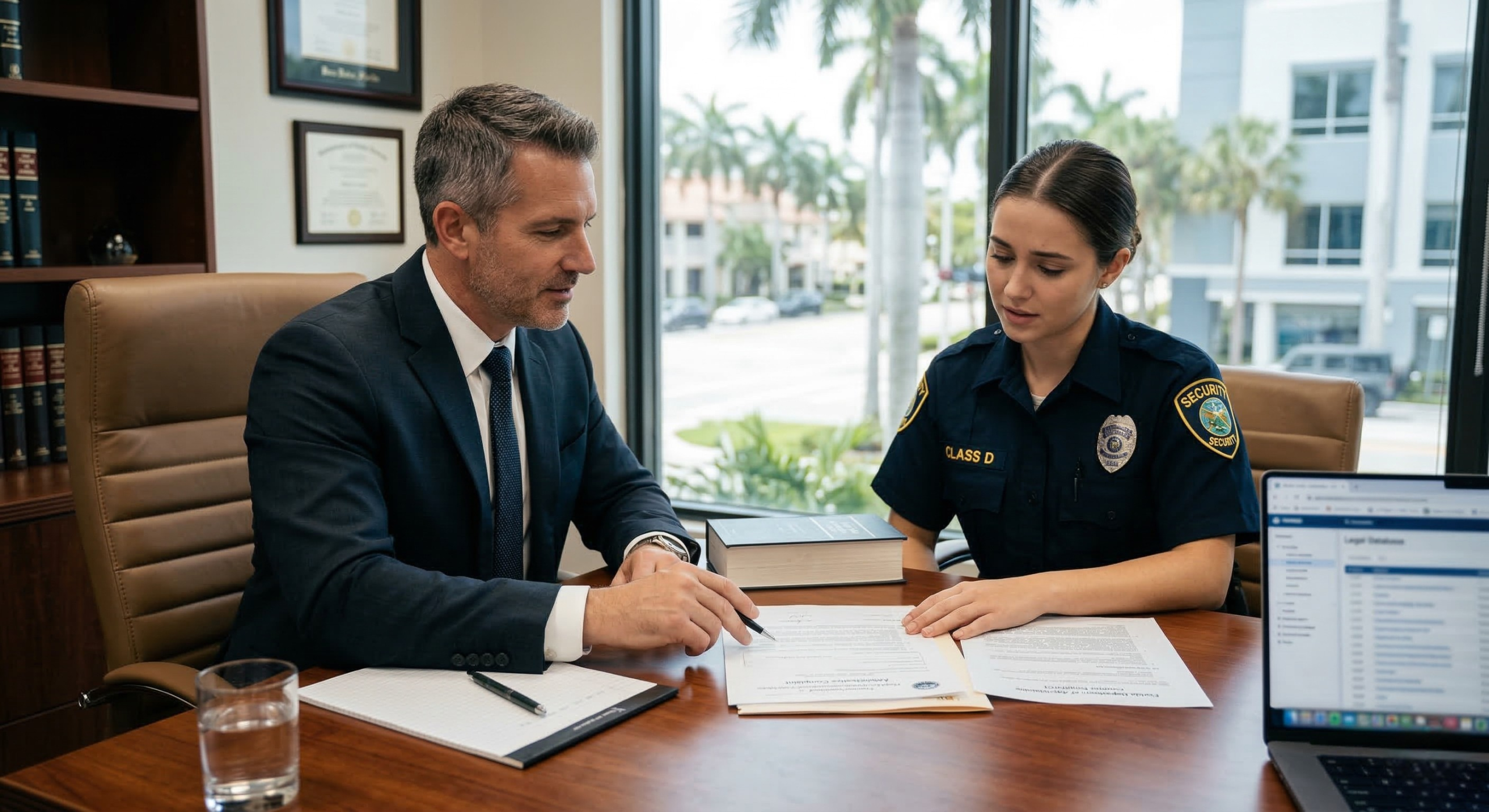
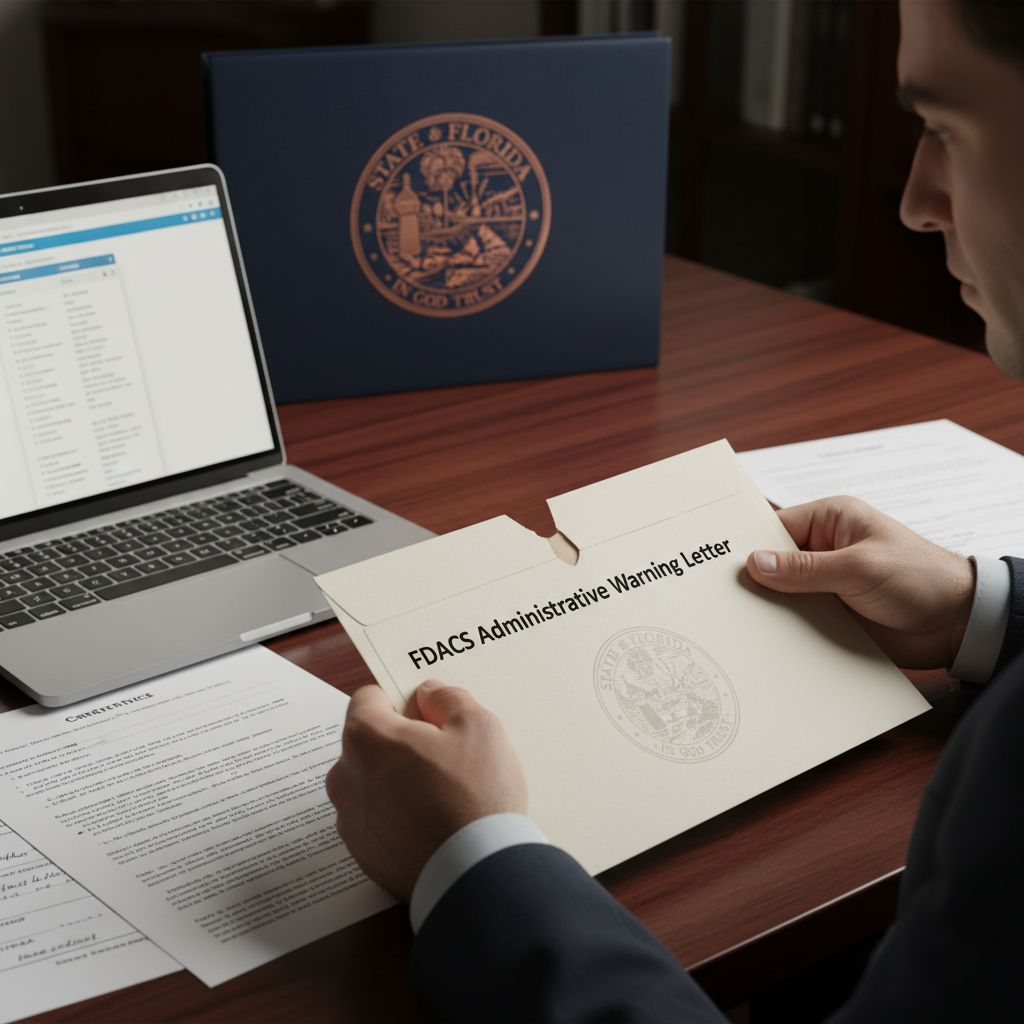
If your business has received an administrative warning letter from the FDACS, you’re likely feeling a mix of uncertainty and urgency. We understand how stressful this can be. For professionals licensed in the industry, this is not just a routine piece of mail. It is a precursor to potential disciplinary action, civil penalties, and the possible suspension or revocation of your license. The letter is a crucial legal inflection point, and your response, or lack thereof, must be strategic, informed, and immediate.
At Elevate Legal Services, PLLC, we’re a Boca Raton-based law firm specializing in defending FDACS violation administrative complaintsand administrative law hearings. For immediate assistance, call us at 561-770-3335 or email [email protected]. We’re ready to help you navigate through the warning letter, assess your risks, and craft a defensible strategy.
With decades of experience representing individuals and businesses in regulatory matters, Elevate Legal Services, PLLC combines authoritative legal knowledge with a practical, client-centered approach. If you’re facing potential enforcement action under Chapter 482 of the Florida Statutes, particularly around identification card violations, training requirements, inspections, or licensing definitions, we can provide the clarity and representation you need.
Understanding the Legal Framework: Chapter 482 of the Florida Statutes
To effectively respond to an FDACS warning letter, it’s critical to understand the statutory framework behind it.
1. What is Chapter 482?
Chapter 482of the Florida Statutes governs the regulation of pest control activities in Florida, often referred to as the “Structural Pest Control Act.”It sets licensing requirements, identification card requirements, definitions of pest control, and grounds for discipline or enforcement.
2. Section 482.021(22)(b) – Definition of Pest Control “Inspection”
Under § 482.021(22), the statute defines “pest control” to include several activities. Sub-paragraph (b) states:
“the identification of or inspection for infestations or infections in, on, or under a structure, lawn, or ornamental;”
In practical terms, if your business performs inspections (for pests, wood-destroying organisms, etc.) without complying with licence or identification card requirements, FDACS may consider that a violation.
Florida Administrative Code 5E-14.103(1)(2):This rule establishes the strict identification standards for any vehicle used in the conduct of pest control. The requirements are not suggestions; they are explicit mandates:
- The vehicle must be permanently marked with the licensee’s name or trade name.
- “Permanently marked” is defined as paint or decals applied to the vehicle body itself.
- The markings must appear conspicuously on both sides.
- The lettering must be in bold and at least 1 1/2 inches high.
- The failure to properly mark vehicles used by inspection technicians constitutes a clear violation. The use of unmarked personal vehicles for WDO inspections is a direct challenge to this rule.
3. Section 482.091(10) – Identification Card Training Requirements
Section 482.091 deals with employee identification cards for pest control licensees. Subsection (10) provides that each identification card holder must receive:
- 4 hours of classroom training in pesticide safety, integrated pest management, and applicable federal/state laws within six months after issuance (or within two years before issuance).
- At least 2 hours of continuing training by the renewal date of the card.
Failing to meet these training or supervision requirements can trigger FDACS enforcement—possibly beginning with a warning letter.
Florida Administrative Code 5E-14.1421(1):This Administrative Code section closes the loop. While the Statute mandates the training, the Rule mandates the record-keeping. It states unequivocally that the “licensee shall maintain written training records… and make those records available during routine inspection or upon request of the department”. The violation here is not necessarilythe failure to train, but the failure to document that training. Even if Mr. David Cates completed his training, the licensee’s failure to maintain or present the paper trail is a direct, citable violation.
4. Why a Warning Letter Matters
When FDACS issues an administrative “warning letter,” it is often the first step in regulatory enforcement. It signals to the licensee or cardholder that FDACS believes there has been non‐compliance and invites a response. If ignored or not properly addressed, the matter can escalate into a formal administrative complaint, hearing, suspension, or revocation of a licence. Having legal counsel at this stage is crucial.
Common Triggers for Warning Letters Under Chapter 482
From our experience at Elevate Legal Services, PLLC, here are some frequent issues that lead to warning letters under Chapter 482:
- Inspection Activities Without a Proper Identification Card
If an employee or inspector conducts pest-control inspections or identification of infestations under § 482.021(22)(b) but lacks the required identification card under § 482.091, it can constitute unlicensed practice. - Failure to Meet Training Requirements
The 4-hour classroom training and 2-hour renewal training mandated by § 482.091(10) are strictly enforced. Missed training sessions, undocumented attendance, or incomplete curriculum can raise red flags. - Misapplying Definitions of Pest Control
Businesses may misclassify activities (for example, calling something “consulting” when it is actually an “inspection” or “application” as defined in § 482.021(22)). Such misclassification can lead to enforcement. - Recordkeeping, Advertising, and Contract Violations
While not specific to the two subsections in your question, non-compliance with rules about inspection reports (§ 482.226), advertising (§ 5E‐14.142(6)(a)–(b) F.A.C.), and contract regulation can trigger FDACS scrutiny.
What to Do When You Receive an FDACS Warning Letter
If you’re holding a warning letter from FDACS, it’s vital to act swiftly and strategically. Here’s a roadmap:
Step 1: Preserve Your File
Immediately save all documents relating to the warning: the letter itself, any inspection reports, employee records, training logs, identification card applications, contracts, advertising materials, and correspondence with FDACS or clients. These will form the backbone of your response.
Step 2: Contact Experienced Administrative Law Counsel
As we say at Elevate Legal Services, PLLC, you don’t want to go it alone. The statutes and administrative procedures can be complex; you need a thorough evaluation of the alleged violation and potential consequences.
Step 3: Conduct an Internal Audit
- Verify whether the activities cited (inspection, application, solicitation) were properly licensed under Chapter 482.
- Check whether the person performing the activity held a valid identification card and completed the required training under § 482.091(10).
- Review whether your business’s contracts, advertising, and record-keeping comply with relevant rules.
- Confirm whether the statutory definitions of pest control under § 482.021(22) were followed correctly.
Step 4: Prepare a Response to the Warning Letter
Your response should be timely, professional, and factually supported. Key components may include:
- A clear explanation of your position (admissions, if any; corrective actions; mitigating factors).
- Documentation supporting compliance (training certificates, card issuance records, contracts, inspection logs).
- A plan for remedial measures (if applicable) to demonstrate good-faith efforts to comply.
- Request for guidance or clarification from FDACS if statutes or rules are ambiguous.
Step 5: Engage the Process Proactively
Don’t simply wait for FDACS’s further action. By showing cooperation, responsiveness, and proactive corrections, you may avoid a formal disciplinary plan or mitigate the penalty. If an administrative hearing becomes necessary, having counsel familiar with FDACS administrative law hearings is critical.
Why Choose Elevate Legal Services, PLLC?
At Elevate Legal Services, PLLC, we bring a combination of legal depth and client-focused service:
- Authoritative Expertise: Our attorneys have represented clients in FDACS disciplinary proceedings, administrative law hearings, and license defense matters.
- Professional & Reassuring Approach: We speak clearly (avoiding unnecessary legal jargon) yet cover the complexity behind the scenes—providing peace of mind for business owners and managers dealing with regulatory issues.
- Tailored Guidance: Every situation is unique. We assess your business’s history, the warning letter’s content, and build a strategic plan focused on resolution.
- Transparent Communication: We keep you informed at every step, ensuring that you understand your rights, your options, and likely outcomes.
- Proven Results: We’ve achieved favorable outcomes for clients facing FDACS matters, whether dismissals, reductions in penalty, or successful negotiations that preserve licences and operations.
When you call 561-770-3335 or email [email protected], we’ll schedule a confidential consultation, review the warning letter and your records, and outline how we can assist.
FAQs — Frequently Asked Questions
Q1: What exactly is a “warning letter” from FDACS?
A: A warning letter is an official communication from FDACS indicating potential non-compliance. It typically precedes formal disciplinary action such as an administrative complaint. It signals you must take the matter seriously and respond promptly.
Q2: Does receiving a warning letter automatically mean my licence will be suspended or revoked?
A: No, receiving a warning letter does notautomatically mean suspension or revocation. But it is a red flag indicating FDACS may escalate if compliance issues are not addressed. A strong response can avoid formal action.
Q3: I have an employee who did inspections but didn’t have a card. The business intends to fix it. Does that help?
A: Yes, voluntary correction, cessation of the unlicensed activity, training, and proper documentation all help your position. But you still need to address the past activity: did it violate § 482.021(22)(b) (inspection definition) and § 482.091(10) (training/card)? You should respond with legal counsel.
Q4: How much time do I have to respond to the warning letter?
A: The warning letter will indicate a timeframe, but regardless, you should act quickly gather records, consult counsel, and prepare your response. Delays may negatively affect the outcome.
Q5: Will this matter appear on my record/publicly?
A: It can. FDACS disciplinary actions and license violations may become part of the public record. Minimizing or avoiding formal action is advantageous to preserve your business reputation and licensure standing.
Q6: What are the costs or penalties if the matter escalates?
A: Potential consequences include formal administrative complaints, fines, suspension or revocation of license or identification card, and costs of hearing. These can be far more costly than timely legal representation.
Q7: Can I handle the response myself without a lawyer?
A: While it is technically possible, it is risky. FDACS regulations and administrative law are complex, and evidence must be presented properly. Engaging an attorney experienced in FDACS enforcement improves your chance of a favorable outcome.
What to Do Now
- Call us at 561-770-3335 or email [email protected] to schedule a consultation.
- Gather and preserve all relevant documentation: warning letter, training logs, identification cards, inspection reports, contracts, and employee records.
- Do not ignore the letter or delay time is of the essence.
- Work collaboratively with counsel to craft a response and, if necessary, begin remediating any areas of non-compliance (training, card issuance, stopping unlicensed inspections).
- Stay informed, we’ll guide you through your options, likely outcomes, and next steps.
At Elevate Legal Services, PLLC, our mission is to empower you, not just to respond to the problem, but to build a path forward. We understand the pressure you’re under when facing regulatory enforcement from FDACS. With our authoritative expertise, professional yet empathetic approach, and client-centered focus, we’re ready to stand with you.
Don’t wait. Call us today at 561-770-3335for a confidential consultation or fill out our online contact form. Let us help you navigate this challenging moment, safeguard your business, and move forward with confidence.