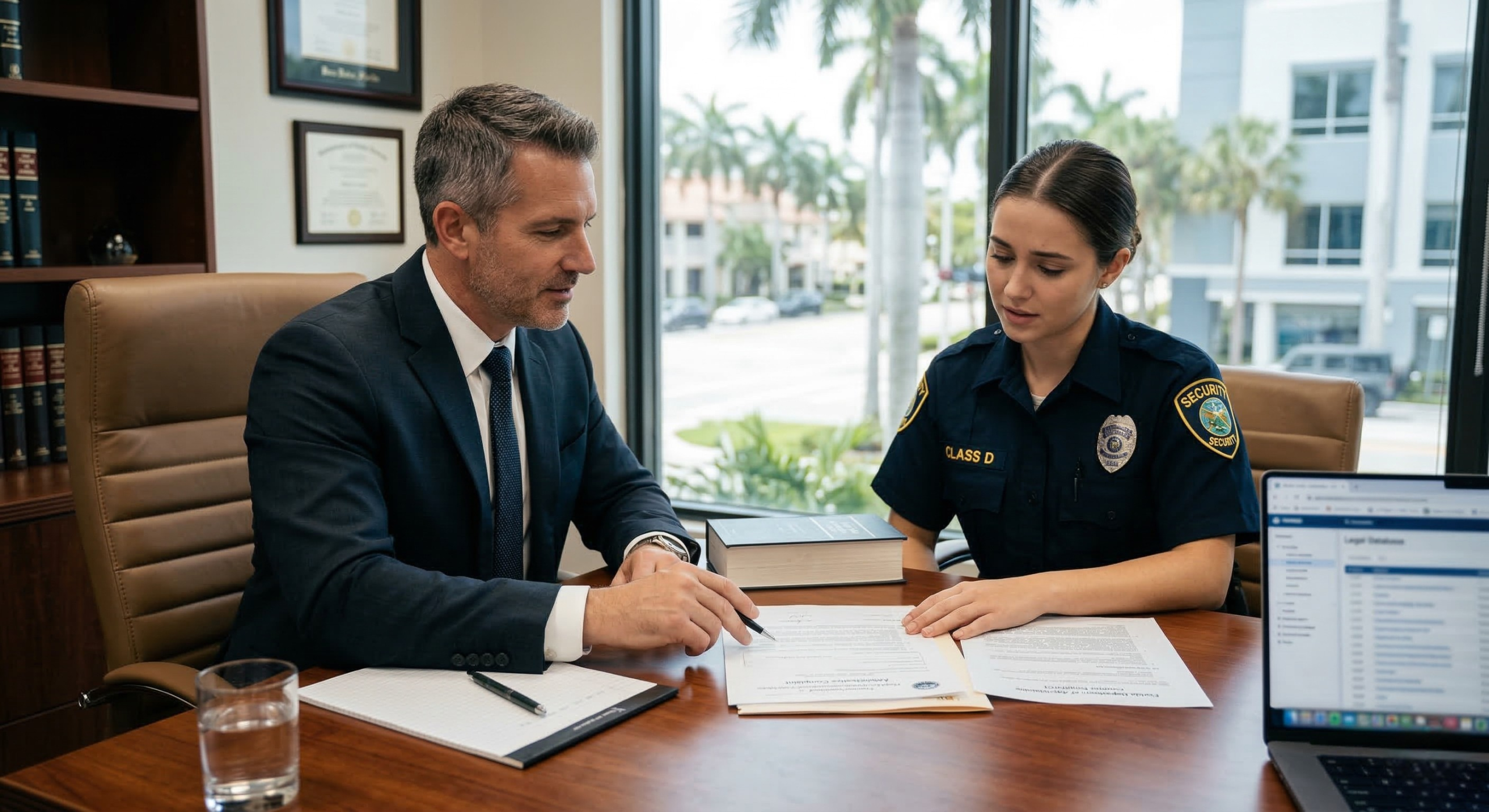

Receiving an administrative complaint from the Florida Department Of Business And Professional Regulation can be overwhelming. Defending your construction contractor license is critical when your business and livelihood are at risk, and uncertainty about what comes next is completely understandable.
You’re not alone. With the right guidance, you can understand the process, assert your rights, and protect your career.
Need immediate guidance? Defending your construction contractor license starts with trusted legal support. Contact Elevate Legal Services, PLLC at 561-770-3335 for a confidential consultation today.
In this guide, we will break down the complexities of Florida Statute Chapter 489. You will walk away with a clear understanding of common violations, including fund misapplication and project abandonment, the penalties you face, and a step-by-step roadmap for protecting your license in the Administrative Law Court.
The Weight of Florida Statute Chapter 489
 Florida maintains some of the strictest construction regulations in the country. These laws protect the public, but they also create a complex web of rules for contractors navigating project finances and licensing paperwork.
Under Florida Statute Chapter 489, the DBPR has the authority to investigate and discipline both licensed and unlicensed individuals. If you have been served with a complaint, the state is alleging that you failed to meet the professional or ethical standards required by your trade.
Why the DBPR is Aggressive
The DBPR’s primary mission is to protect consumers. Because construction and electrical work involve significant financial investments and life-safety issues, the department moves quickly to investigate claims of:
- Unlicensed contracting or “holding out” as a contractor.
- Financial mismanagement or misapplication of funds.
- Poor workmanship or abandonment of jobs.
The reality is this:The DBPR has a team of investigators and attorneys working against you. To level the playing field, you need a defense that understands the nuances of administrative law.
Common Violations for Licensed Contractors
Many experienced contractors find themselves in the crosshairs of the DBPR not because of “bad work,” but because of administrative errors or unexpected financial hurdles.
Here is how those violations break down legally.
1. Misapplication of Construction Funds (F.S. § 489.129(1)(b))
This is perhaps the most frequent complaint we see. In simple terms, this statute prohibits using money paid for a specific project to cover unrelated expenses.
The law is clear: If you receive funds for labor, materials, or services for a specific job, those funds must be used for thatjob. Common scenarios include:
- “Robbing Peter to Pay Paul”:Using a deposit from a new client to finish a previous project. Even if you intend to “catch up” later, the DBPR considers this a violation.
- Personal Use:Using project draws to pay for personal bills, vehicles, or vacations.
- Withholding Subcontractor Pay:Failing to pay suppliers or subs after you have already been paid by the homeowner.
2. Financial Mismanagement & Stability (F.S. § 489.129(1)(g))
Contractors are required to maintain a certain level of financial stability. If a business falls into a pattern of failing to pay debts or fulfill financial obligations, the DBPR may move to suspend your license to protect the public from a failing business.
3. Project Abandonment (F.S. § 489.129(1)(j))
Under Florida law, abandonment occurs when a contractor ceases work on a project without a legal excuse or fails to perform any work for a period of 90 consecutive days.
Often, a contractor stops work because the homeowner has stopped paying. However, without the proper legal documentation and notice, the DBPR may view this as abandonment.
The Danger of Unlicensed Activity
If you are operating without a license, the DBPR treats your case with even more urgency. Under Chapter 489, “unlicensed activity” isn’t just about performing the work; it’s about the offer.
“Holding Yourself Out”
You can be hit with an Administrative Complaint simply for advertising yourself as a “licensed contractor” or “electrician” if you do not hold active state credentials.
The consequences for unlicensed activity are uniquely harsh:
- Permanent Bans:You may be barred from ever obtaining a valid license in Florida.
- Cease and Desist Orders:Immediate legal orders to stop all business operations.
- Criminal Charges:Unlicensed contracting is often referred to the State Attorney for prosecution as a misdemeanor or even a felony during a declared State of Emergency.
You can learn more about how we defend these specific cases on our Unlicensed Activity in Floridapage.
What is at Stake? Understanding the Penalties
The goal of a DBPR Administrative Complaint is discipline. Depending on the severity of the alleged violation, you may face:
- Administrative Fines:These can range from $500 to over $10,000 per violation.
- Restitution:You may be ordered to pay back every cent a client claims they lost.
- Probation:Your business may be monitored for years, requiring frequent audits.
- License Suspension or Revocation:The total loss of your right to work in your trade.
- Public Reprimand:A permanent record of the discipline that appears on the DBPR’s public portal.
The Step-by-Step Defense Process
If you’ve received a complaint, the clock is ticking. You generally have 21 daysfrom the date of service to respond. If you miss this window, you waive your right to a hearing.
Here is how the legal process typically unfolds:
- Review the Election of Rights (EOR):You must choose whether to dispute the facts (Formal Hearing), admit the facts but argue for a lower penalty (Informal Hearing), or settle.
- Organize Your Evidence:Gather signed contracts, bank statements, and communication logs (emails/texts) showing why work was delayed or how funds were spent.
- Negotiation and Settlement:Many cases are resolved through a Settlement Agreement (Stipulation). This allows you to negotiate the fine and terms without a full trial.
- The Hearing:If a settlement isn’t reached, you will present your case before an Administrative Law Judge(ALJ) or the Licensing Board.
Why Professional Representation Matters
You might be tempted to call the DBPR investigator and explain your side of the story.
Wait.Investigators are looking for admissions of guilt. Anything you say, even a “reasonable” excuse, can be used to build the state’s case against you.
When you work with Elevate Legal Services, PLLC, we act as a barrier between you and the state. We handle the communication, the filings, and the strategy. We speak the language of the Administrative Court, so you don’t have to.
Our approach is:
- Authoritative:We know the statutes inside and out.
- Reassuring:We take the burden of the legal process off your shoulders.
- Strategic:We look for weaknesses in the DBPR’s evidence to get charges reduced or dismissed.
Our lead attorneys have extensive experience in DBPR, DOH & FDACS Administrative Complaints, ensuring your professional reputation is in safe hands.
Conclusion: Defending Your Construction Contractor License Today
 A DBPR complaint feels like a heavy cloud over your head, but it doesn’t have to be the end of your career. By acting quickly and seeking professional legal guidance, you can navigate this process and come out the other side with your business intact.
Don’t leave your livelihood to chance. Let our experienced team help you navigate the complexities of Florida’s administrative laws.
Let us help you protect it.
At Elevate Legal Services, PLLC, We Focus On Defending Your Construction Contractor License By Providing Strategic Guidance And A Strong, Dedicated Defense.
Don’t wait. Call us today at 561-770-3335for a confidential consultation or fill out our online contact form.
Frequently Asked Questions (FAQ)
1. How long do I have to respond to a DBPR complaint?
In Florida, you typically have 21 days from the date you were served with the Administrative Complaint to file your Election of Rights. Failure to respond usually results in a “Default,” which often leads to license revocation.
2. Can I still work while a DBPR case is pending?
Generally, yes. Unless the DBPR issues an Emergency Suspension Order, your license remains active while the case moves through the administrative process.
3. What is the difference between an informal and a formal hearing?
A formal hearing is like a trial where you dispute the facts of the case before a judge. An informal hearing is used when you agree with the facts but want to present “mitigating circumstances” to the Board to ask for a lighter penalty.
4. Can the DBPR send me to jail?
The DBPR is a regulatory agency, not a criminal court. However, they can refer cases of unlicensed activity or significant fraud to the State Attorney’s Office for criminal prosecution.
5. Will a DBPR complaint show up on my public record?
Yes. If the DBPR finds “probable cause” and issues a final order of discipline, it becomes a public record searchable on the DBPR’s License Search portal.
Would you like me to generate a meta description and SEO title for this blog post to help with your search engine ranking?