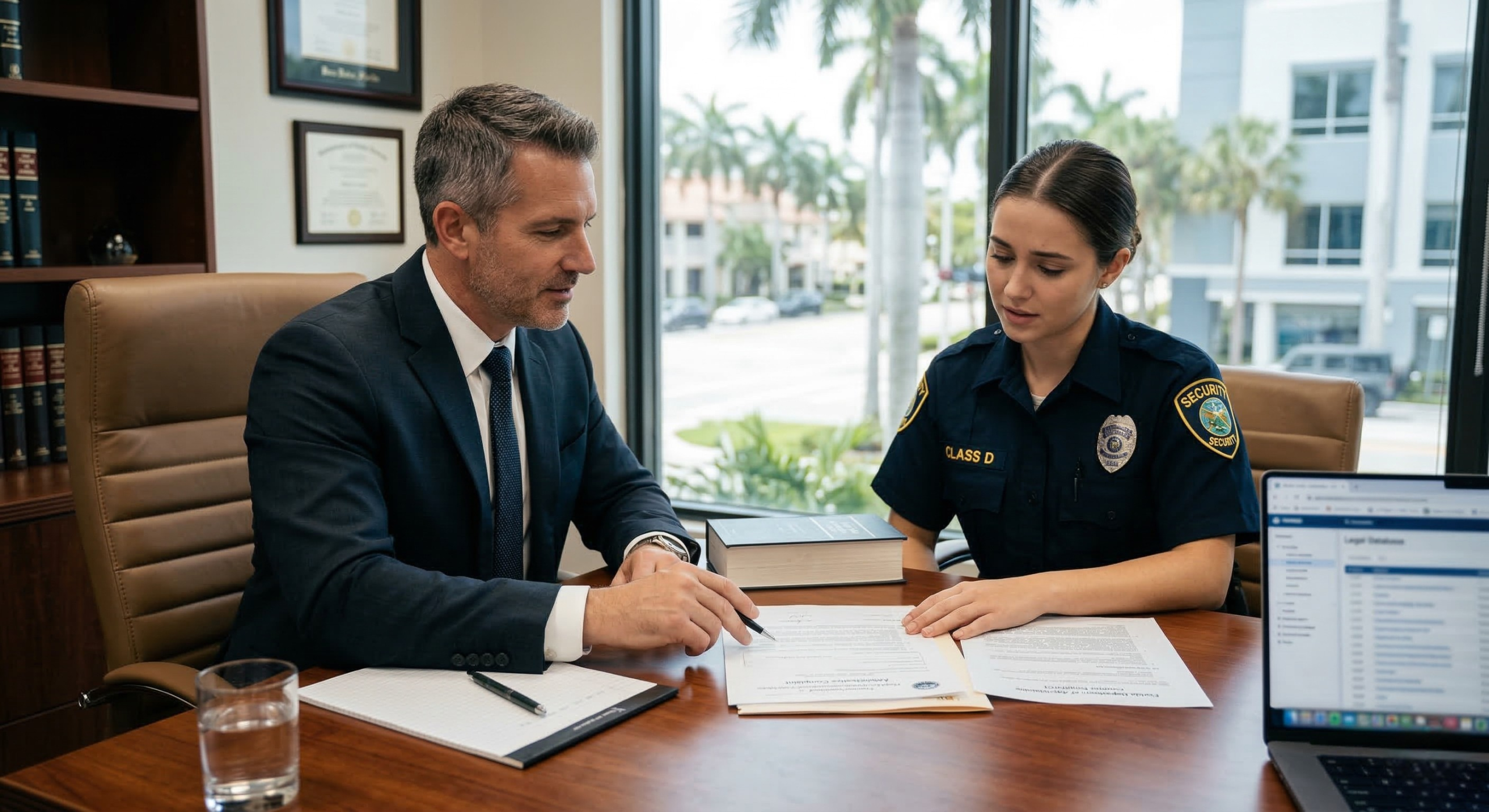

Are you a licensed cosmetologist, nail technician, or aesthetician facing Administrative Complaints Under F.S. Chapter 477 from the Florida Department of Business and Professional Regulation (DBPR)?
If you are, you are likely feeling overwhelmed, worried, and unsure of the future of your career.
These complaints, citing violations under Florida Statute Chapter 477, are not merely warnings; they are formal legal accusations. They carry the severe risk of substantial fines, probation, and even the suspension or permanent loss of your professional license.
You’re not alone. With the right guidance, you can understand the process, assert your rights, and protect your career.
Need immediate guidance? Call Elevate Legal Services, PLLCtoday on 561-770-3335 for a confidential consultation, or contact usto speak with an attorney if you are facing Administrative Complaints Under F.S. Chapter 477.
By the time you finish reading, you will have a clear understanding of the common violations, the step-by-step DBPR complaint process, the benefits of professional legal representation, and answers to your most pressing questions.
The Legal Threat: Understanding Administrative Complaints F.S. Chapter 477 Violations
 Florida Statute Chapter 477 governs the practice of cosmetology, setting strict requirements for public health, safety, and professional conduct.
The moment the DBPR files a complaint, it indicates they have found probable cause that a violation occurred. The disciplinary action that follows is complex.
It is governed by the Florida Board of Cosmetology and the rules of administrative law.
Violations can stem from routine salon inspections, consumer complaints, or targeted investigations. Here are two of the most serious allegations we defend against:
1. Unlicensed Activity: F.S. 477.0265(1)(a)
Section 477.0265(1)(a) makes it explicitly unlawful to practice or offer to practice cosmetology services—including hair, skin, and nails—without a valid, active license issued by the Florida Board of Cosmetology.
Here’s what that means legally.The DBPR aggressively enforces this statute to protect the public. Even licensed professionals can run afoul of this rule unintentionally.
Common scenarios leading to this administrative complaint include:
- Operating Without a Salon License:Providing services out of a home, apartment, or mobile setting without securing the required separate salon license.
- Scope of Practice Issues:A nail technician or aesthetician performing services that require a full cosmetology license, or vice versa.
- Premature Advertising:Promoting services on social media or online before all licensing requirements are complete and the license is officially active.
When a DBPR investigator finds evidence, penalties can include fines up to $5,000 per violation, probation, and the suspension or revocation of your license.
2. Banned Substance Possession: F.S. 477.0265(1)(g) and MMA
One of the most immediate threats to a nail technician’s or cosmetologist’s license is a violation of Section 477.0265(1)(g).
This section specifically prohibits the use or even the possession of a product containing a liquid nail monomer that includes methyl methacrylate (MMA).
MMA is a chemical widely banned in the industry due to its proven health risks, including severe allergic reactions, permanent nail damage, and respiratory issues. Its use violates fundamental safety standards.
The Double Threat of Gross Negligence
A violation of 477.0265(1)(g) is rarely an isolated charge. The DBPR often layers it with an allegation of “gross negligence or incompetence” under F.S. 477.029(1)(h).
This dual charging allows the Board to pursue the most severe penalties. They argue that knowingly using a banned, unsafe substance demonstrates a dangerous disregard for public welfare.
If you are facing an allegation involving MMA, immediate action is essential to challenge the evidence and demonstrate prompt remediation.
The Administrative Law Process: A Step-by-Step Defense Guide
The DBPR disciplinary process is legal in nature, governed by Chapter 120, Florida Statutes (The Florida Administrative Procedure Act). Navigating it correctly is crucial to safeguarding your license.
Phase 1: Investigation and Complaint
- Investigation Begins:The DBPR’s Division of Regulation conducts a thorough investigation based on a complaint.
- Evidence Collection:This may involve site visits, reviewing advertising, collecting product samples, or interviewing witnesses.
- Probable Cause:If a Probable Cause Panel finds sufficient evidence, a formal Administrative Complaintis issued.
Phase 2: The Critical Response – Election of Rights (EOR)
Upon receiving the Administrative Complaint, you will be sent an Election of Rights (EOR) Form. This is the single most important document you will encounter, and the deadline to respond is strict.
Choosing the wrong option here can permanently limit your defense. This is why consulting an attorney before selecting an option is non-negotiable.
The three primary options are:
- Request a Formal Hearing (Dispute of Facts):Choose this if you dispute anymaterial fact alleged in the complaint (e.g., denying the unlicensed activity). The case proceeds to the Division of Administrative Hearings (DOAH) before an Administrative Law Judge (ALJ).
- Request an Informal Hearing (Mitigation):This is appropriate only if you agree with all the facts but wish to argue for a lesser penalty based on mitigating circumstances (e.g., first-time offense). The matter is heard directly by the Florida Board of Cosmetology.
- Waive Your Rights:You admit the allegations and accept the penalties proposed by the DBPR. This is only recommended with the express guidance of legal counsel.
Phase 3: Building Your Defense Strategy
At Elevate Legal Services, PLLC, our administrative law attorneys immediately begin building your customized defense. Our goal is to protect your professional life.
Our strategy may include:
- Negotiating a favorable settlement with the DBPR prosecutor to minimize fines and avoid license suspension.
- Gathering exculpatory evidence, such as vendor invoices, remediation proof, and compliance logs.
- Preparing for a formal hearing by securing expert testimony and preparing witnesses for cross-examination.
Why Expert Administrative Law Representation is Essential
 The DBPR administrative process is not designed to be easily navigable by licensees. It is a legal environment with complex rules of procedure and evidence.
Attempting to handle a complaint alone often leads to the worst possible outcome.
Authoritative Guidance and Protection
We act as your dedicated shield, ensuring you meet all critical deadlines and file the appropriate motions.
- Understanding the Fine Print:We translate the dense legal jargon of F.S. Chapter 477 into clear, actionable advice.
- Mitigating Penalties:We aggressively seek alternatives to license revocation, often successfully negotiating reduced fines, probation instead of suspension, or the dismissal of meritless charges.
- Preserving Your Reputation:We work to keep disciplinary actions as confidential as possible and manage the crisis, protecting your long-term professional standing.
Credibility, Reliability, and Compassion
Our team is focused exclusively on DBPR, DOH & FDACS Administrative Complaintsand professional license defense.
We understand the high stakes involved for cosmetologists and other regulated professionals.
We offer solution-oriented, compassionate advocacy, helping you secure your right to work and your ability to serve your clients.
Final Thoughts and Next Steps
An Administrative Complaint is a serious matter, but it is not the end of your career.
With Elevate Legal Services, PLLC guiding you, you gain a powerful, professional advocate dedicated to protecting your license and reputation. We are here to transform complex legal challenges into practical, navigable solutions.
Don’t delay. Early intervention is your strongest defense.
Contact our Boca Raton office for immediate, confidential representation.
Don’t wait. Call us today at 561-770-3335for a confidential consultation or fill out our online contact form.
Frequently Asked Questions (FAQ)
Q1: What are the typical penalties for a first-time cosmetology license violation in Florida?
Penalties vary based on the specific violation and the Board’s guidelines. For less severe administrative infractions, penalties often include a fine (up to $5,000 per count), a formal reprimand, and mandatory continuing education. However, violations involving unlicensed practice or banned substances (like MMA) often lead to license suspension or revocation, even for a first offense.
Q2: What is the first thing I should do after receiving a DBPR Administrative Complaint?
The most critical first step is to contact an experienced administrative law attorney immediately. Do not speak with DBPR investigators or sign the Election of Rights (EOR) Formuntil you have received legal advice. The deadline to return the EOR form is strict, and a mistake at this stage can be irreversible.
Q3: How long does the administrative complaint process usually take?
The duration of the process varies significantly based on your response. If a settlement is negotiated, the case may be resolved in a few months. However, if you elect a formal hearing before the Division of Administrative Hearings (DOAH) to contest the facts, the process can often take 9 to 18 months.
Q4: If I am accused ofUnlicensed Activity in Florida, can I continue to work?
In most cases, yes, you can continue to work while the Administrative Complaint is pending. However, the Board of Cosmetology can file an Emergency Suspension Order (ESO) in extreme circumstances, such as an immediate threat to public safety. Consulting legal counsel ensures you understand your current status and any potential risks to your ability to practice.
Q5: How can a lawyer help if the facts in the complaint are true?
Even if the facts are true, an attorney is essential. We can negotiate with the DBPR prosecutor to present mitigating circumstances, ensure the penalty is the least severe possible under the law, and seek a settlement that avoids a permanent revocation or minimizes the duration of any suspension. Our goal is always to protect your ability to practice.