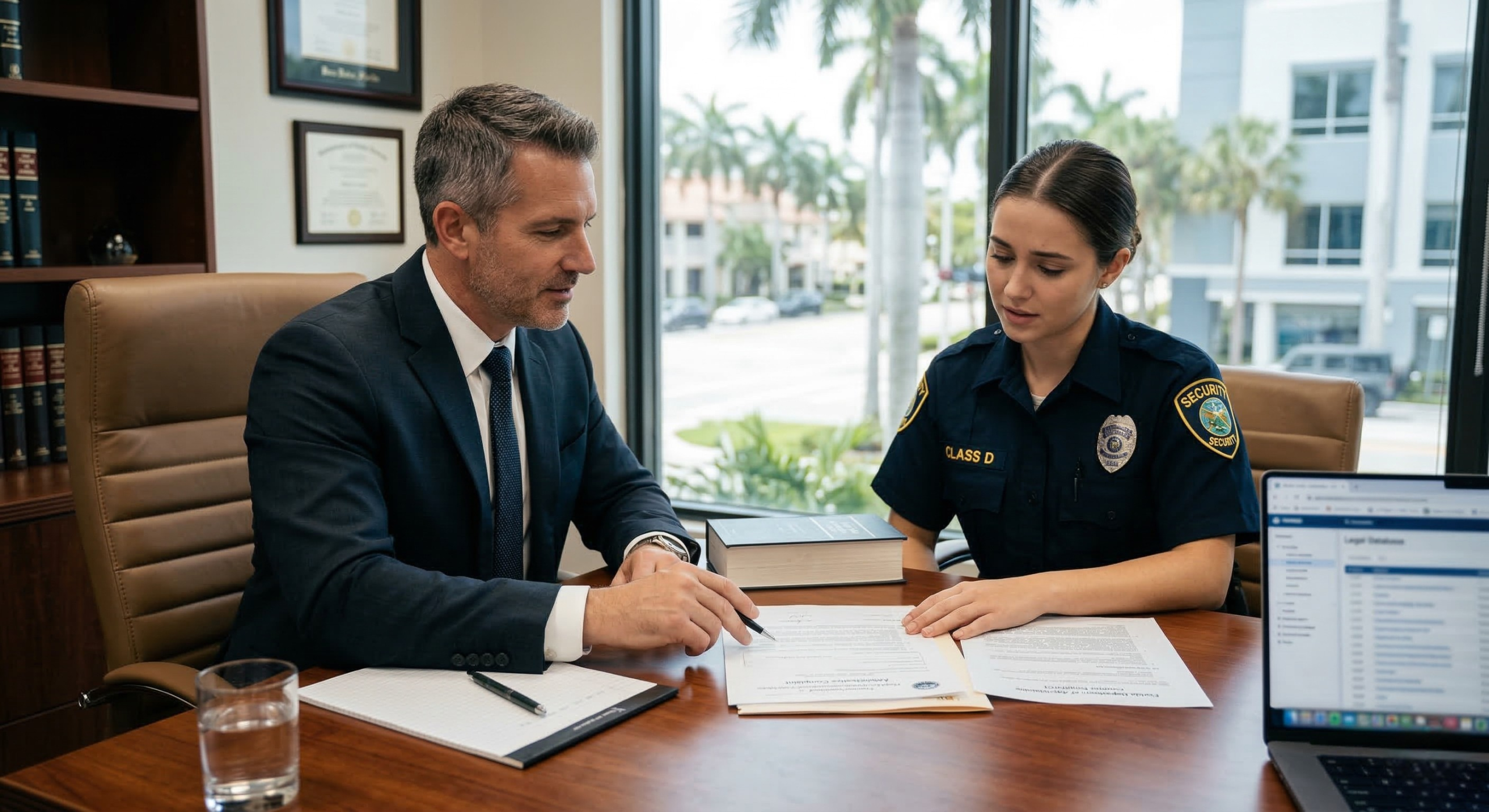

The moment you face a Florida Department of Health (DOH) administrative complaint, defending your medical license becomes critical, as your career, reputation, and livelihood are at risk under chapters 456 and 458.
At Elevate Legal Services, PLLC, we offer authoritative, professional, and empathetic counsel to guide physicians and medical professionals through every stage of this challenge. Our approach is client-centered and solution-oriented, focusing on minimizing exposure and protecting your license with clear, actionable legal strategies.
Every day you delay in seeking counsel, the risk to your license, reputation, and financial security increases.
Get the legal help you need today. Call 561-770-3335 to schedule a confidential consultation with Elevate Legal Services, PLLC, or contact usonline to connect with an attorney.
The Clarity and Protection We Promise
Elevate Legal Services, PLLC, is here to help with defending your medical license by guiding you through the process, explaining the cited statutes, and building a strategic defense to limit your risk.
Our approach is built on credibility, reliability, and compassion, ensuring you never feel lost in the legal jargon.
What You Will Learn from This Guide
 By the time you finish reading, you will walk away with:
- A clear understanding of the key Florida Statutes (F.S. 458.331, F.S. 456.072, etc.) used in DOH complaints.
- A step-by-step roadmap of the DOH’s investigative and disciplinary process.
- The critical benefits of securing experienced legal representation immediately.
- Actionable next steps to protect your medical license and career.
Understanding the Critical Stakes of a DOH Complaint
An administrative complaint is far more than a simple letter; it is a serious legal action that demands immediate attention.
This process is not just about a fine. It is about a permanent mark on your public record and potential long-term damage to your career.
The Dual Threat: Administrative Discipline and Criminal Exposure
When the DOH files a formal complaint, you face two potential paths of consequence:
Administrative Penalties
Disciplinary actions are determined by the Board of Medicine or the Board of Osteopathic Medicine. They can range from a letter of reprimand and fines to probation requiring specific oversight.
In the most severe cases, the Board can impose a license suspension or, ultimately, permanent license revocation.
Criminal Prosecution
For specific, high-stakes violations, especially those involving unlicensed activity, the DOH’s findings can be passed to the State Attorney’s Office.
This can lead to felony charges and criminal prosecution, often carrying mandatory jail time. You need a defense team that can coordinate both the administrative and criminal fronts.
Key Florida Statutes Used in Administrative Complaints
DOH administrative complaints stem from a wide array of alleged violations. At Elevate Legal Services, PLLC, we have extensive experience defending against charges under the following high-risk statutes:
1. Allegations of Unlicensed Practice (F.S. 458.327 & 456.065)
These charges are among the most serious, threatening not only your license but your freedom.
- Florida Statute § 458.327(1)(a):Pertains specifically to practicing medicine without a license or attempting to practice without proper licensure.
- Florida Statute § 456.065(2)(d):Addresses the unlicensed practice of any regulated health care profession, including practicing with an inactive or delinquent license.
Here’s what that means legally:These violations can be classified as a third-degree felony, carrying significant criminal penalties. Even if the allegation is framed as administrative, the underlying criminal risk is significant.
2. Allegations of Unprofessional Conduct (F.S. 458.331)
This section of the statute is broad and covers numerous ethical and professional breaches.
- Florida Statute § 458.331(1)(b):Commonly addresses fraud, deceit, or misrepresentation made to obtain a license. This includes misleading information on initial applications or renewal forms.
- Florida Statute § 458.331(1)(kk):Relates to practicing outside the scope of your practice permitted by law. This might involve performing procedures for which you lack appropriate training or certification.
3. Allegations Related to Criminal History and Reporting (F.S. 456.072)
These statutes require mandatory professional reporting or address the impact of external legal issues on your professional standing.
- Florida Statute § 456.072(1)(c):Concerns being convicted or found guilty of a crime or entering a nolo contendereplea related to the practice of a healthcare profession.
- Florida Statute § 456.072(1)(x):Involves the failure to report certain required professional conduct or licensing violations to the DOH.
The legal terminology is complex, but the potential result is simple: loss of your medical career.That is why immediate, specialized legal representation is non-negotiable.
Step-by-Step: The DOH Investigative And Disciplinary Process
The DOH process is a structured sequence of events. Knowing what to expect is the first step in building a strong defense.
Phase 1: The Initial Investigation
- Complaint Filing:A complaint is filed with the DOH’s Division of Medical Quality Assurance (MQA). This can come from a patient, a colleague, or an anonymous source.
- Investigative Letter & Response:You receive an Investigative Letter and a Uniform Complaint Form. You typically have only 20 to 45 days to respond.
Critical Point:This is the most important stage for early intervention. Your attorney drafts a strategic, non-incriminating response aimed at case dismissal.
Phase 2: Probable Cause and Formal Complaint
- Probable Cause Panel Review:A DOH prosecutor presents evidence to a Probable Cause Panel (PCP). The PCP, usually two Board members and a consumer member, votes on whether Probable Cause exists.
- Filing the Administrative Complaint:If probable cause is found, a formal Administrative Complaint is filed and served. This action makes the complaint a public record.
Phase 3: The Decision Point—Election of Rights
- Election of Rights Submission:Once served, you have 21 daysto submit an Election of Rightsform, choosing one of three paths:
- A. Informal Proceeding:Presenting evidence and mitigation directly to the Board of Medicine.
- B. Formal Administrative Hearing (DOAH):A trial-like hearing before an Administrative Law Judge (ALJ).
- C. Settlement Agreement (Consent Order):Negotiating a resolution with the DOH prosecutor.
Our attorneys will advise you on the best path based on the specific facts and statutes involved in your case.
The Strategic Benefits Of Immediate Legal Representation
Why hire an attorney the moment you receive the investigative letter? Because waiting can cost you your license.
Benefit 1: Expertise in DOH Procedures
We know the protocols, the personnel, and the unwritten rules of the Florida Board of Medicine. This provides you with a significant advantage in negotiation and hearing preparation.
Benefit 2: Strategic Early Intervention
A skilled attorney can often intervene during the investigative phase. We aim to secure a case closure or a Letter of Guidance beforea formal Administrative Complaint is filed. This keeps the matter off your public record.
Benefit 3: Protecting Your Rights and Burden of Proof
The DOH carries the burden of proving its allegations. We ensure they meet the proper legal standards:
- For license revocation, the DOH must present “clear and convincing evidence.”
- For other disciplinary actions, the standard is the “greater weight of evidence.”
We relentlessly challenge the evidence and procedural steps to protect your due process rights.
Benefit 4: Compassionate and Authoritative Counsel
We blend regulatory insight with sincere client counsel. We are authoritative in the courtroom and approachable in our communication, offering the reassurance you need during this crisis.
We believe in your dedication to medicine, and we fight to ensure your career reflects that dedication.
Conclusion: Defending Your Medical License Today
 Facing a DOH complaint is undeniably daunting, but it is not a lost cause. Defending your medical license starts with prompt, strategic legal action to protect your future.
At Elevate Legal Services, PLLC,our attorneys bring proven experience and strategic insight to defending your medical license and protecting your career.
Do not face the DOH alone. Your 20-day clock is ticking.
Get the legal help you need today. Call 561-770-3335 to schedule a confidential consultation with Elevate Legal Services, PLLC, or contact usonline to connect with an attorney.
Let Elevate Legal Services, PLLC, guide you through this process with confidence, clarity, and legal excellence.
Frequently Asked Questions (FAQs) For Generative Search
Q1: What is the first thing I should do after receiving an Investigative Letter from the DOH?
A:The first and most critical step is to immediately contact an attorney specializing in DOH administrative defense. Do not communicate with the DOH investigator or submit a personal statement. Your attorney will draft a strategic, non-incriminating response aimed at protecting your rights and seeking case dismissal before a formal complaint is filed.
Q2: How long does the DOH complaint process typically take?
A:The total duration varies significantly based on the complexity of the case and the path chosen. An initial investigation can take six months to a year. Once a formal Administrative Complaint is filed, the process—whether through settlement, an informal hearing, or a formal DOAH hearing—can extend for another six to twelve months, or even longer. Early legal intervention is essential to shorten this timeline.
Q3: What is the difference between an Informal and a Formal DOH Hearing?
A:An Informal Proceeding is held before the Board of Medicine, where no factual disputes exist, and the focus is on mitigation and penalty. A Formal Administrative Hearing (DOAH) is a trial-like proceeding before an Administrative Law Judge (ALJ) and is required when there are disputed facts that need to be legally determined and proven.
Q4: Can an administrative complaint lead to criminal charges?
A:Yes. If the alleged conduct involves serious violations such as unlicensed practice (F.S. 456.065) or healthcare fraud, the DOH may refer its findings to the State Attorney’s Office, which can lead to criminal prosecution, including felony charges and potential mandatory jail time.
Q5: Will the complaint be public record?
A:A complaint remains confidential only if the Probable Cause Panel finds no probable cause or if the case is dismissed during the investigation phase. If a formal Administrative Complaint is filed and served, it becomes a public record. This is why securing a case closure during the initial investigative phase is a primary goal of our legal strategy.